Industry 1.0
18th CenturyArose with the introduction of mechanization through steam and water power. This shift moved production away from handcrafting and towards machine-driven efficiency, marking the beginning of industrial-scale economies.
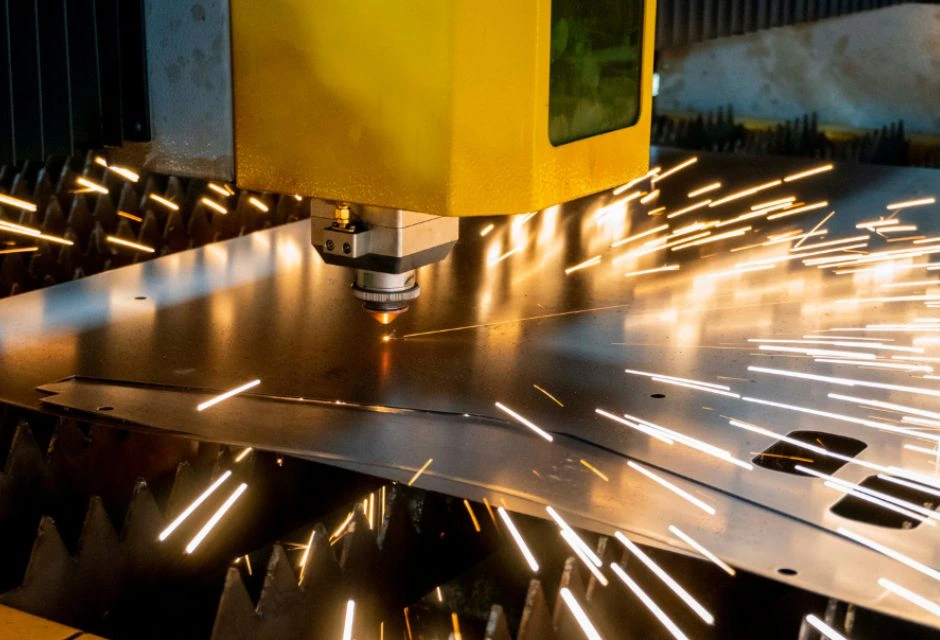
Smart Manufacturing represents a paradigm shift in the manufacturing environment, leveraging smart manufacturing technology to create intelligent, interconnected, and adaptive production systems. By integrating the Internet of Things (IoT), real-time monitoring, cloud computing, and artificial intelligence (AI), it enables real-time data collection and analysis across production lines, driving informed decisions that enhance efficiency, reduce waste, and optimize quality control.
According to the National Institute of Standards and Technology (NIST), Smart Manufacturing is defined as fully-integrated, collaborative manufacturing systems that respond in real time to meet changing demands and conditions in the factory, in the supply network, and in customer needs. Moreover, this definition emphasizes not only connectivity but also adaptability and responsiveness across the entire manufacturing environment. In practice, therefore, it means using digital twins, predictive maintenance, and advanced analytics to continuously improve the production process and supply chain management. Furthermore, these capabilities allow manufacturers to transition seamlessly from reactive to proactive operations, ensuring that decision-making becomes more intelligent, agile, and efficient at every stage.
Arose with the introduction of mechanization through steam and water power. This shift moved production away from handcrafting and towards machine-driven efficiency, marking the beginning of industrial-scale economies.
Unfolded with the adoption of electricity and the development of assembly line techniques. This phase introduced mass production, standardization, and lower costs, making goods more affordable and accessible.
Emerged ushering in the age of electronics, IT systems, and robotics. With innovations such as programmable logic controllers (PLCs) and computer-aided design (CAD), production gained flexibility, precision, and consistency.
Represents the current era of smart manufacturing, propelled by interconnected technologies such as IoT, AI/ML, digital twin systems, and real-time data analytics. Today's smart factories leverage data collected across the production process and supply chain to enable predictive maintenance, enhance quality control, minimize waste, and respond to disruptions instantly.

Real-time monitoring and data collected from connected devices improve efficiency by 20–30% in some industries (McKinsey).

By integrating predictive analytics and digital twins, production lines adapt quickly to supply chain disruptions and market shifts.

Smart factories minimize waste and reduce energy consumption. For instance, digital twins can cut carbon emissions by up to 20% (Accenture).

AI-powered defect detection achieves up to 90% accuracy, significantly reducing rework and scrap costs (Deloitte).
Cloud computing and automation reduce operational costs, while predictive maintenance saves an estimated $50 billion annually worldwide (PwC).
Smart manufacturing technology supports augmented reality (AR) and AI-driven insights, enhancing workforce training and decision-making.
Real-time data enables transparent, responsive supply chains that adapt seamlessly to global challenges.
IoT/IIoT
Sensors and devices that enable real-time monitoring and automation.
AI/Machine Learning
Data-driven decision-making, predictive maintenance, and quality control.
Big Data Analytics
Processing large volumes of data collected from production processes.
Autonomous Robots
Flexible robots that operate independently in manufacturing environments.
Additive/Hybrid Manufacturing
3D printing combined with traditional methods to optimize production.
Cloud Computing
Scalable data storage and remote collaboration.
5G Connectivity
Low-latency networks enabling faster real-time monitoring and responsiveness.
Edge Computing
Localized data processing for faster decision-making.
Simulation/Digital Twins
Virtual replicas of physical systems for testing and optimization.
Design for Manufacturing (DFM)
Engineering approach ensuring product designs are optimized for production.
Automated manufacturing primarily replaces manual labor with programmed machines. However, autonomous manufacturing, enabled by AI and machine learning, allows systems to self-optimize without human intervention. While automation executes repetitive tasks, autonomy integrates predictive maintenance, digital twins, and AI-driven insights to continuously evolve and enhance the manufacturing process.
Organizations implementing smart factory systems should begin with a clear roadmap:
Smart Manufacturing is far more than automation—it is intelligence in action. Unlike the traditional manufacturing process, which relied heavily on manual labor and was prone to human error, the term smart manufacturing defines smart manufacturing as a holistic and data-driven approach to production. By integrating IoT, AI/ML, digital twin technology, and cloud computing, it enables real-time data-driven decisions based on vast amounts of data collected across the production process and supply chain. This shift toward digital manufacturing within Industry 4.0 not only enhances productivity but also minimizes waste, improves quality control, and ensures greater adaptability. Ultimately, smart manufacturing defines a future where technology and intelligence converge to transform the industry, reducing inefficiencies while positioning businesses to remain globally competitive.
Recent advancements in smart manufacturing increasingly center on the adoption of the Industrial Internet of Things (IIoT), artificial intelligence (AI), machine learning (ML), digital twin technology, and cloud-based data analytics. Specifically, IIoT enables real-time data collection across production lines, thereby reducing downtime and strengthening quality control through predictive maintenance. In parallel, AI and ML algorithms optimize workflows by detecting inefficiencies, reducing waste, and enhancing predictive decision-making. Furthermore, digital twins allow manufacturers to simulate production processes within virtual environments, which minimizes risks before physical implementation. When combined, these technologies significantly improve efficiency by enhancing equipment utilization, streamlining production processes, and enabling adaptive, data-driven supply chain management.
The future of smart manufacturing lies in the convergence of intelligence-driven automation and sustainable production practices. By 2030, AI, cloud computing, and advanced robotics will integrate to create self-learning, autonomous manufacturing systems that continuously optimize themselves. Manufacturers will increasingly employ real-time monitoring and big data analytics to achieve supply chain resilience, ensuring continuity even in volatile global markets. Moreover, the industry will prioritize sustainability through energy-efficient systems and waste reduction strategies, aligning with broader environmental and regulatory objectives. In this context, smart factories will evolve into adaptive ecosystems that not only maximize productivity but also minimize environmental impact.
One of the most significant trends in advanced manufacturing is the adoption of AI-enabled digital twins. Unlike traditional automation, digital twins allow manufacturers to simulate entire production environments virtually, integrating real-time operational data with predictive analytics. This enables proactive decision-making, from optimizing energy consumption to predicting material shortages. Edge computing and cybersecurity advancements ensure that IoT data is processed securely and efficiently at the source. These trends reflect a shift from isolated technological adoption toward fully integrated, intelligent manufacturing ecosystems.
Smart manufacturing technology uses digital tools that make factories intelligent, connected, and adaptable. It combines IoT for real-time monitoring, AI and ML for predictive insights, and cloud computing for data management. These technologies create smart factories where processes adapt automatically, decisions rely on data, and supply chains grow resilient. Unlike traditional mechanization, smart manufacturing adds digital intelligence to improve efficiency, minimize waste, and support sustainability.